Ask her in March
Two Abuja weddings in one December: the lavish one guests endured, and the smaller one they still talk about. What actually makes a wedding feel luxurious, and why it is rarely the budget.
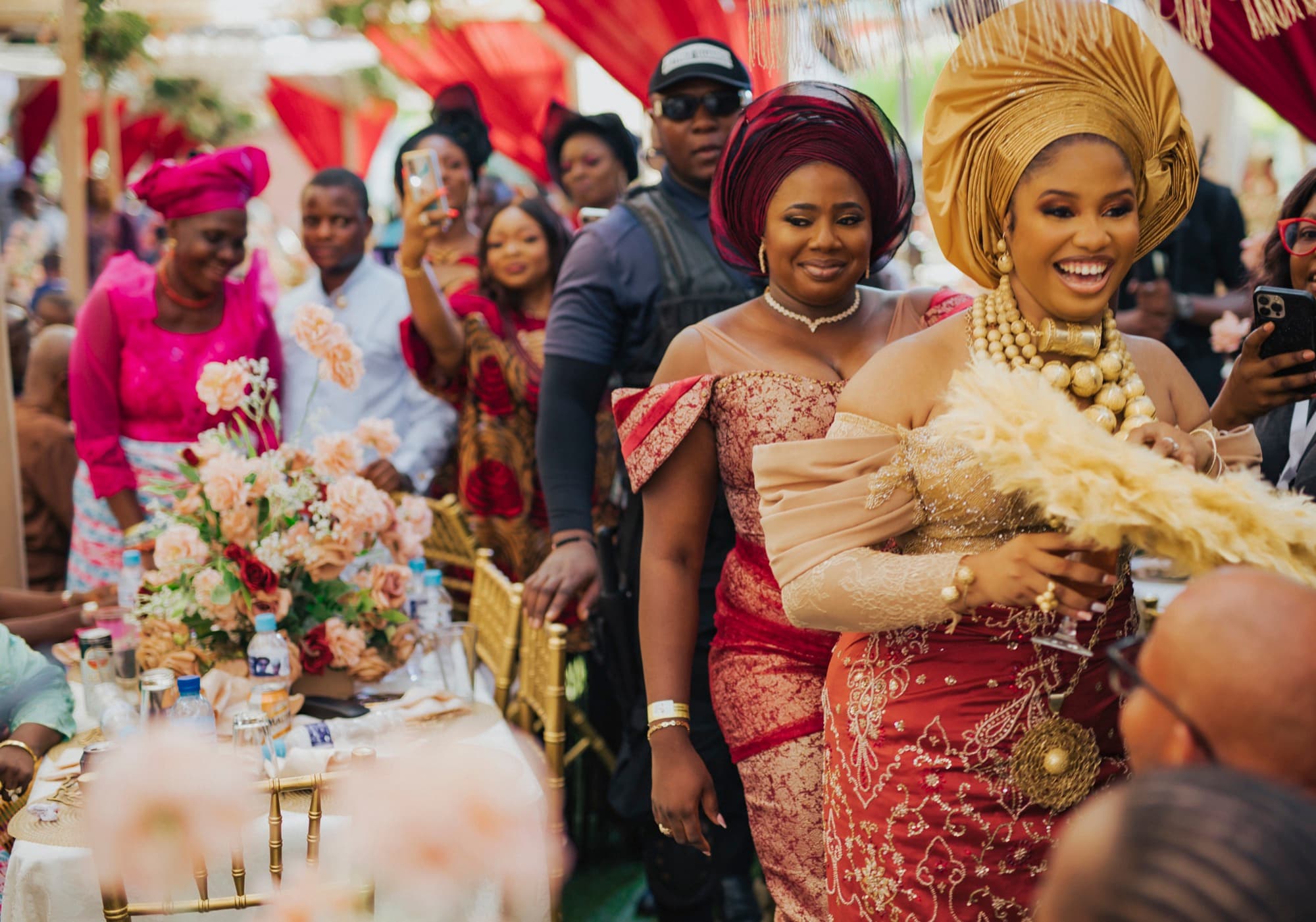
The programme, printed in gold, says noon. It is past one in the afternoon, and the aunty in the emerald gele is still standing.
Nobody assigned her a seat. The ushers are outnumbered, and the protocol list has never left the family WhatsApp group. Around her, the ballroom is doing the most: four shades of gold, a champagne tower competing with the flowers, the flowers competing with a light installation, a live band and a DJ politely drowning each other out. Somewhere behind a curtain, while the food goes cold, two crews discover they were both promised the same extension socket.
It is, by any measure, an expensive wedding. You can see the money from the car park.
That is exactly the problem.
The next Saturday
Same aunty, different hall. This one is smaller, noticeably smaller, and she braces herself to be underwhelmed.
Instead, an usher meets her at the door, greets her properly and walks her to a seat near the family, away from the draught of the air conditioning. The room holds one idea, and holds it with complete confidence. The programme moves without a single "please bear with us". The food arrives hot, at the exact moment appetite peaks, not an hour after it has died. Nobody visible looks stressed, least of all the couple.
Ask her in March which of the two was the luxurious wedding. Go on, ask her.
She will not mention money. She will say, "Ah, that one. Everything just flowed."
What the second couple knew
Come closer, because we usually save this for the first meeting: luxury at a wedding has almost nothing to do with the size of the budget. The feeling never tracks the spending. It tracks the care.
The first wedding had more of everything: more flowers, more colour, more entertainment, more courses. But more, unedited, reads as noise. The second had one considered idea and the discipline to refuse everything that argued with it. Enough, chosen well, feels richer than more. It took us years of standing at the back of ballrooms before we believed it ourselves.
Everything sounded like one voice
The quieter secret does not photograph at all. At the second wedding, the invitation, the flowers, the light, the music, the menu and the pacing all spoke the same language, as if one person had written the whole day. Because, in effect, one had.
That harmony never happens when six vendors each do their own beautiful thing and hope for the best. It happens when one voice directs the whole day, so that no element is allowed to fight another. It is the least photogenic part of planning, and the most expensive-feeling thing in any room.
What was hiding behind the flow
The seat found before the aunty had to ask for it. The timing that never sagged. The couple who actually ate. None of it was accidental; every bit of it was arranged in advance and then hidden, because luxury dies the moment effort becomes visible.
Guests will not remember your charger plates. We promise you they will not. They will remember how the day felt: whether they were fed on time, whether someone was looking out for them, whether the joy was allowed to run uninterrupted. Care, made invisible, is the entire trick.
What the second wedding cost
You are expecting us to admit that the second wedding cost nearly as much. Often, a wedding like that costs less. Restraint kills the panic purchases, those frantic late additions bought out of fear that the day will not feel like enough. One voice kills duplication: the same lighting priced twice, because neither vendor knew the other had been asked. And nothing steadies a budget like an honest guest list; the guest count decides more than you think.
The couples who spend the most rarely throw the wedding that people are still talking about in March. The couples who choose well do.
There is a seat with your name on it
The first couple bought everything. The second couple were held by someone whose entire job was making the day flow. You can see what that looks like in our celebrations, and when you are ready to talk about your own day, begin here.
Bring the aunty. We will have found her seat before she asks.
Last updated 4 July 2026